
The process wall
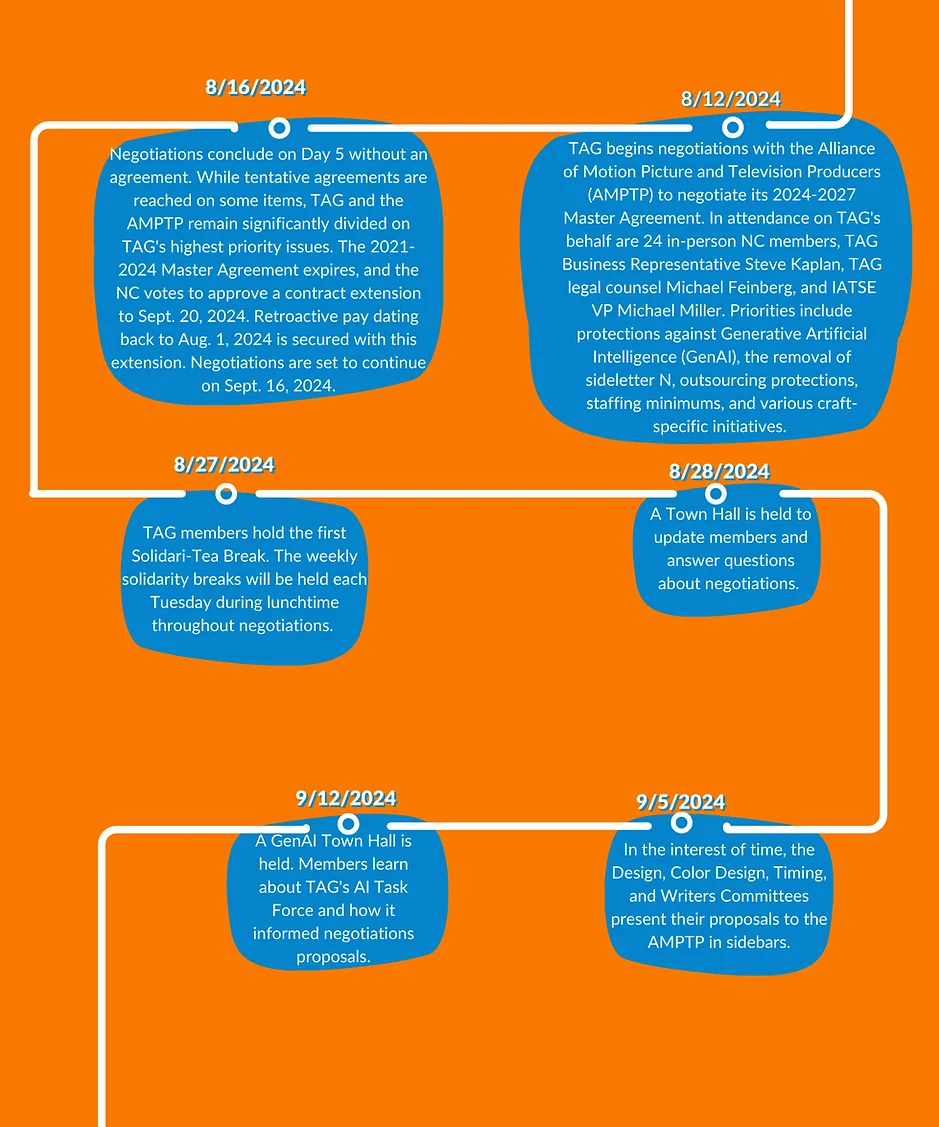
Animation and story work is done inside a production pipeline with defined roles, and the wall the Animation Guild, IATSE Local 839, hit in its 2024 negotiations was pipeline reclassification: could a studio route a union role through a generative system and call the resulting job non-union. The guild's own account of the settlement, published on its negotiations campaign site, adds a new Article 21.N specifically to keep that from happening, ratified in December 2024 after bargaining that ran from August to November of that year.
What the documents show
The guild's MOA summary states that union roles using generative AI systems or GenAI-produced material 'will continue to be covered by this agreement,' which is the anti-reclassification clause, and that a member's use of GenAI 'will not affect their pay, rights, or credit.' Producers must give written notice before GenAI use becomes a role requirement, after which a member may request a consultation on non-AI alternatives; producers cannot require a member to supply prompts that would displace other covered workers; and the summary records a specific restriction on using a member's facial or vocal likeness, including scratch audio and behind-the-scenes footage, to train GenAI without consent. The guild's ratification page confirms members voted to approve the 2024-2027 agreement.
Authorship and limitation
The operative mechanism is consultation and disclosure rather than prohibition: the contract does not stop a studio from using generative tools, it requires advance notice, a chance to discuss alternatives, and continued coverage under the existing bargaining unit. Where AI use displaces jobs or changes duties, the summary ties the response to the contract's separate 'Technological Change' clause, meaning displaced members are meant to reach employer-funded training and displacement pay through an existing mechanism rather than a newly invented one. The agreement also indemnifies members against legal claims arising from AI systems they are required to use, which addresses liability, not authorship of the resulting work.
What survives
A story artist or animator keeps bargaining-unit coverage regardless of tooling, a consultation right before GenAI becomes mandatory, and a likeness-training consent requirement that a studio cannot route around through informal footage. Editorially, whether a semiannual studio-guild meeting on AI use, which the summary also describes, produces real oversight is something members would need to track over time rather than take on faith.
- Check whether a written GenAI notice preceded an assignment, and whether a consultation was offered.
- Ask whether any behind-the-scenes or scratch recording of your voice or face was used beyond its original purpose.
- Compare a displacement claim against the contract's Technological Change provisions rather than treating it as unaddressed.
Because the summary is the guild's own simplified account of a fuller memorandum, the underlying contract language controls in any dispute; read this way, the 2024 agreement is a coverage and process contract for a workforce, not a rule about what a generated frame is allowed to depict.
Sources & reading trail
States the new Article 21.N terms: continued coverage, no pay/credit effect, advance notice and consultation, anti-displacement prompting bar, likeness-training consent, and indemnification.
Source published: Not established · Retrieved: 16 September 2026
States that TAG members voted to ratify the 2024-2027 Memorandum of Agreement following negotiations from August to November 2024.
Source published: Not established · Retrieved: 16 September 2026
Papers, documentation, rulings and the makers' own records establish the note; the authorship reading and what-survives are Creative AI editorial analysis. This retrospective draft does not imply the site published on the event date.