The process wall
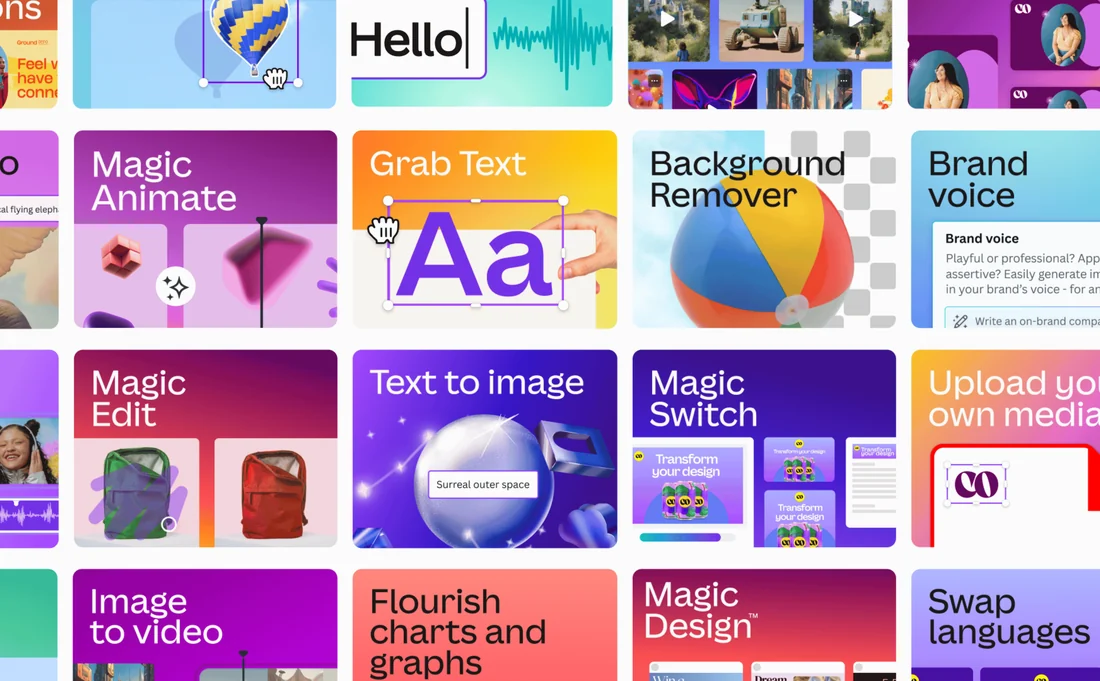
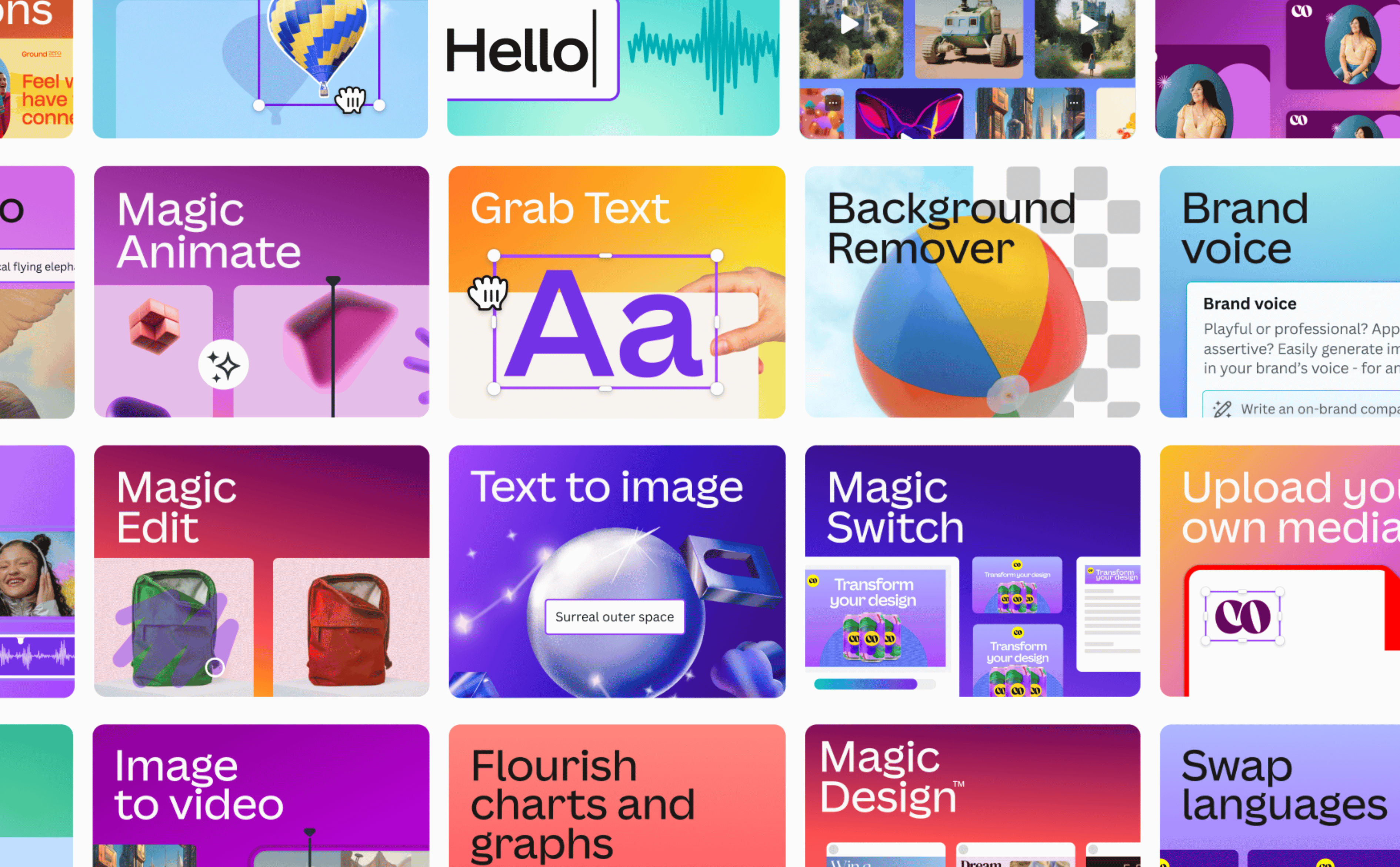
On 4 October 2023, Canva's Magic Studio announcement folded a dozen AI features into a single toolbar: layouts generated from a prompt (Magic Design), images and short video from text (Magic Media, built on 'the success of Text to Image'), local edits made by describing the change (Magic Edit), and a writing assistant already used, the company says, to write 'more than one billion words' since 2022 (Magic Write). For a template-based tool aimed at what the announcement calls 'the 99% of the world without complex design skills,' the working change is that drafting, illustrating and copywriting now sit behind the same prompt box rather than separate skills or separate tools.
What the documents show
The announcement states Magic Media is 'joined by DALL·E by OpenAI, and Imagen by Google Cloud' inside Canva's app marketplace, meaning some image generation is licensed from outside vendors rather than built by Canva itself. On payment and training, Canva commits 'more than $200 million in competitive content and AI royalties for our creator community over the next three years,' paid only to Canva Creators who 'opt-in' to the Creator Compensation Program, which trains 'our proprietary AI models' on their submitted content; Canva states it will not use creator data 'without their explicit permission.' A second document, Canva Shield, retrieved as it stands on 16 September 2026, adds an indemnity: 'eligible enterprise customers are indemnified for AI output, at no extra cost,' which Canva frames as coverage 'in the rare event of an intellectual property claim.'
Authorship and limitation
Three mechanisms sit inside 'Magic Studio' and are worth keeping apart: a licensed third-party generator (DALL·E, Imagen) making the image; an opt-in royalty contract governing whether Canva may train its own models on a creator's work; and a vendor indemnity, a promise to cover legal costs, not a claim that outputs are free of any third party's rights. Canva's page states the indemnity applies to enterprise customers specifically, and it is Canva's claim about Canva's liability, not an independent legal finding about the underlying models. The authorship question a template raises is separate again: Magic Design assembles a 'cohesive and compelling story' from a user's own uploaded media and prompt, so the human contribution is selection and editing of an arranged layout rather than the layout's original design.
What survives
Editorially, a maker using Magic Studio keeps the choice of what to upload, what royalty opt-in to accept, and whether an enterprise indemnity applies to their account tier. Whether an output is indemnified, or whether an asset trained Canva's models, are facts to check in-account rather than assume from the marketing page.
- Check whether the Creator Compensation Program opt-in applies to your account before relying on the royalty claim.
- Confirm which Magic Studio feature is Canva's own model and which is a marketplace app like DALL·E or Imagen.
- Read the indemnity's enterprise-only scope before treating 'commercially safe' as a blanket claim.
Read together, the announcement and Shield describe a bundle of licensing, payment and liability arrangements dressed as one toolbar, each with its own, narrower scope.
Sources & reading trail
Announces Magic Studio's features (Magic Design, Magic Media, Magic Write, Magic Edit) and the $200 million creator royalty commitment.
Source published: 4 October 2023 · Retrieved: 16 September 2026
States enterprise indemnification terms and the creator compensation commitment as a living policy page.
Source published: Not established · Retrieved: 16 September 2026
Papers, documentation, rulings and the makers' own records establish the note; the authorship reading and what-survives are Creative AI editorial analysis. This retrospective draft does not imply the site published on the event date.