The process wall
On 31 August 2022, Hugging Face published the case for a new kind of open licence for machine-learning models, arguing that the software-licensing playbook did not fit an artefact that can cause harm just by being run, not only by being modified and redistributed. The OpenRAIL post set the terms of a decision every maker downloading an open model still faces: read the card and the licence before the first generation, because neither is decorative.
What the documents show
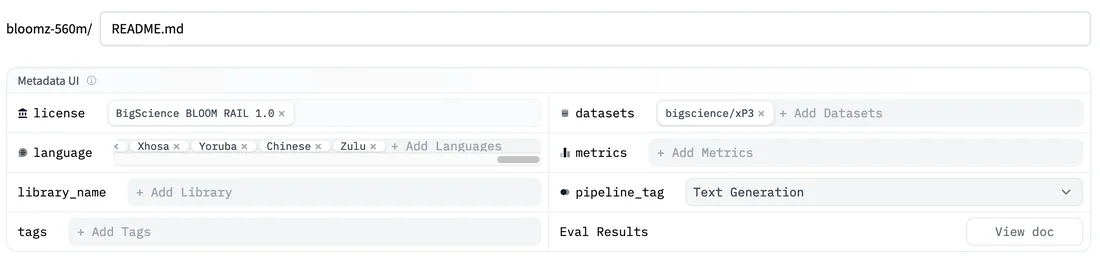
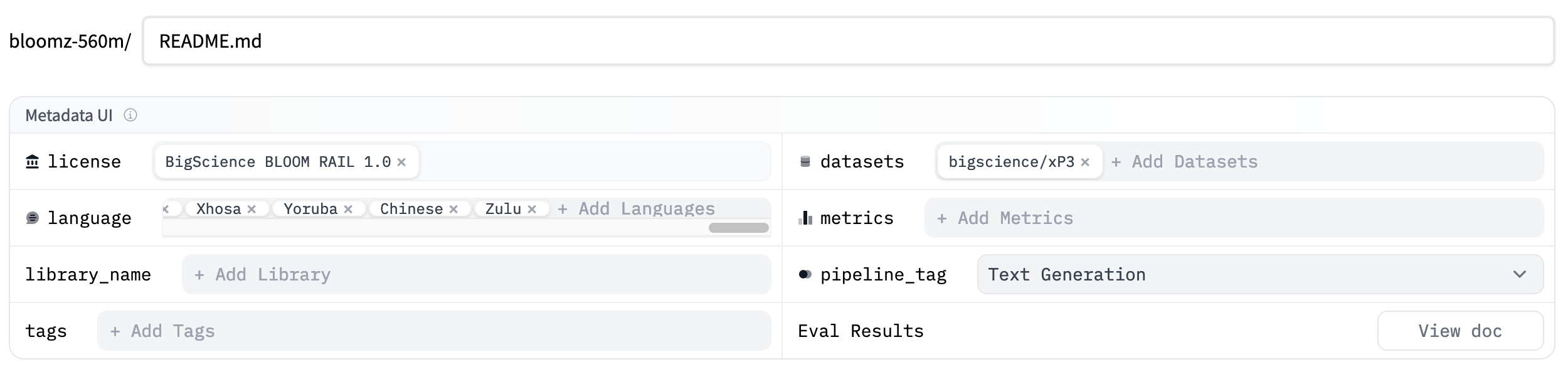
The Hub's model card documentation, current as retrieved on 16 September 2026, states a card should describe a model's intended uses and potential limitations, including biases and ethical considerations, its training parameters, which datasets trained it, and its evaluation results, rendered from a metadata block that also displays and filters by licence on the Hub. The OpenRAIL post describes a licence built from two features: Open, meaning royalty-free access, use and redistribution, paired with Responsible, a set of use-based restrictions on named harmful scenarios written into the licence text, which the post says an ordinary open-source licence does not attempt.
Authorship and limitation
The mechanism to name is what a licence restricts against what a card discloses. A model card is a disclosure document — it states what a model was reportedly trained on and where its own authors say it fails, but nothing on the Hub verifies that a card's claims are accurate, since cards are self-reported by the uploader. An OpenRAIL licence is different in kind: its use-based restrictions are contractual limits on specific applications, enforceable against a licensee regardless of what the card says, so a maker can comply with a card's stated intent and still need to separately check the licence's restricted-use list before commercial deployment.
What survives
A maker who reads both documents before downloading keeps two distinct pieces of information: what a model is reported to do and where it is reported to fail, and what they are contractually permitted to do with it. Editorially, treating a populated model card as proof of safety, rather than a disclosure written by the model's own authors, is a common misreading worth correcting before a client project depends on it.
- Open a specific model's card and check whether training data, limitations and licence are filled in, not left as placeholders.
- Read the specific restricted-use list in an OpenRAIL-family licence before commercial deployment.
- Compare a card's stated intended use against the task actually being asked of the model.
Between them, the two documents describe a two-layer system — self-reported disclosure and enforceable restriction — that only protects a maker who checks both layers rather than treating an open download as unconditionally open.
Sources & reading trail
States what a model card should describe and how license metadata renders and filters on the Hub.
Source published: Not established · Retrieved: 16 September 2026
Introduces the OpenRAIL licence family and explains its open-access-plus-use-restriction mechanism.
Source published: 31 August 2022 · Retrieved: 16 September 2026
Papers, documentation, rulings and the makers' own records establish the note; the authorship reading and what-survives are Creative AI editorial analysis. This retrospective draft does not imply the site published on the event date.