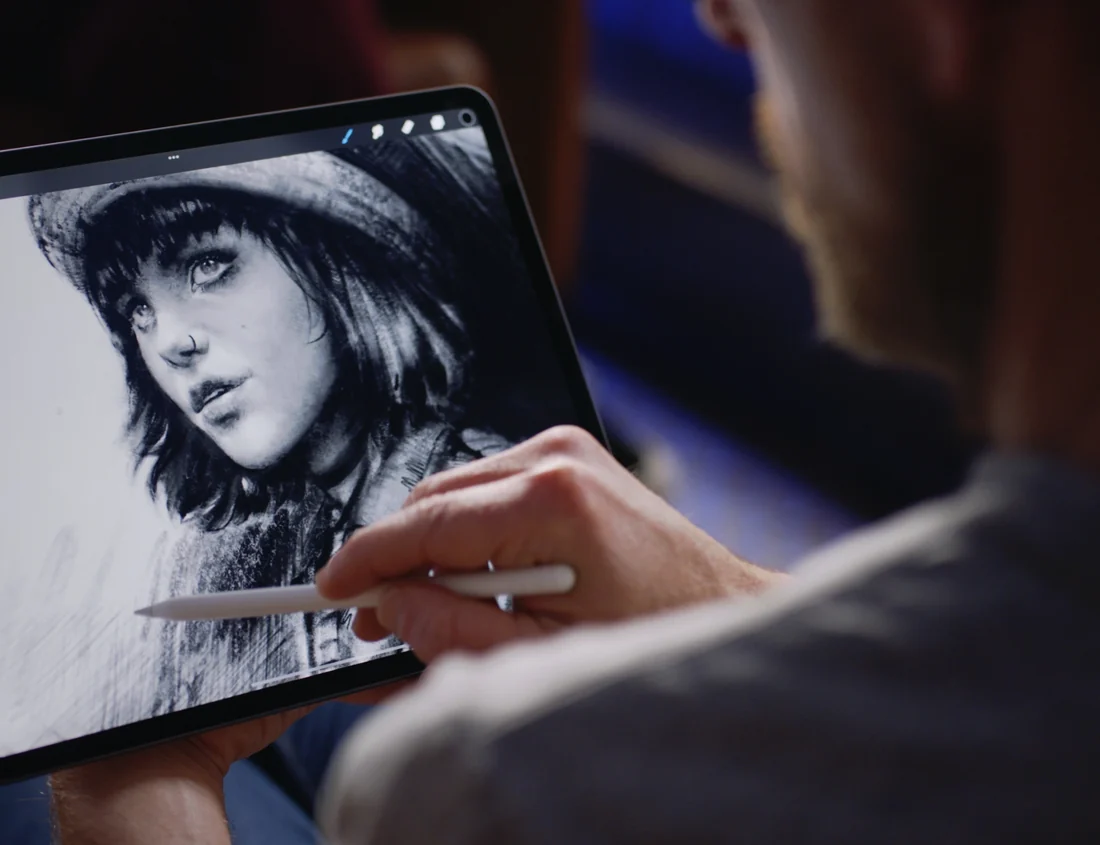

The process wall
By August 2024, Procreate had published a standalone statement page, 'Creativity is made, not generated,' declining to add generative AI to its drawing and animation apps. Nothing in a working file changes because of this: no new tool appears and none is promised. The process wall here is a refusal to build, stated as a company position rather than announced as a shipped feature or a withdrawn one.
What the documents show
An archived capture of the same page from 19 August 2024 carries wording identical to the version retrieved on 16 September 2026, confirming the statement was public by that date and has not been softened since. The statement makes three linked claims rather than one: 'no generative AI,' 'your work belongs to you,' stated as 'we do not have access to your art, by design,' and a privacy claim that 'your activity is not tracked in our apps.' It calls current generative AI 'built on a foundation of theft' and separates it from 'machine learning,' which it calls 'a compelling technology with a lot of merit,' a distinction that keeps other forms of on-device computation open while ruling out models trained on external creative work.
Authorship and limitation
The mechanism worth naming is architectural, not only editorial: 'we do not have access to your art, by design' describes how the app is built, a structure in which a central company server is not positioned to see, store or forward a user's file for any purpose, generative or otherwise. That is a stronger and more checkable claim than a generic privacy promise, because it describes a limitation the company says it cannot bypass rather than one it merely chooses not to exercise. What it does not do is take a position on other companies' models, or on whether art already circulating online has been used to train someone else's generator; the statement's authorship claim covers only what Procreate itself builds and touches.
What survives
Editorially, a maker choosing Procreate on the strength of this page is relying on a public, dated commitment rather than a technical audit; nothing here has been independently verified by a third party in the documents cited. What survives for the artist is a tool whose company has committed, in public and by name, to a specific boundary, which is itself a fact worth checking against future product announcements.
- Compare a future Procreate release against this statement's specific 'no generative AI' line.
- Read the distinction the statement draws between machine learning and generative AI before assuming it rules out all automation.
- Check the archived and current versions of the page for any quiet change in wording.
Procreate's statement is notable less for its argument than for its specificity: a dated, named, architectural claim that a reader can hold the company to in a way a vaguer promise would not allow.
Sources & reading trail
Procreate's current statement declining generative AI, stating the by-design privacy architecture and the 'built on a foundation of theft' framing, as retrieved.
Source published: Not established · Retrieved: 16 September 2026
Archived capture from 19 August 2024 confirming the statement's wording was already public by that date.
Source published: Not established · Retrieved: 16 September 2026
Papers, documentation, rulings and the makers' own records establish the note; the authorship reading and what-survives are Creative AI editorial analysis. This retrospective draft does not imply the site published on the event date.